

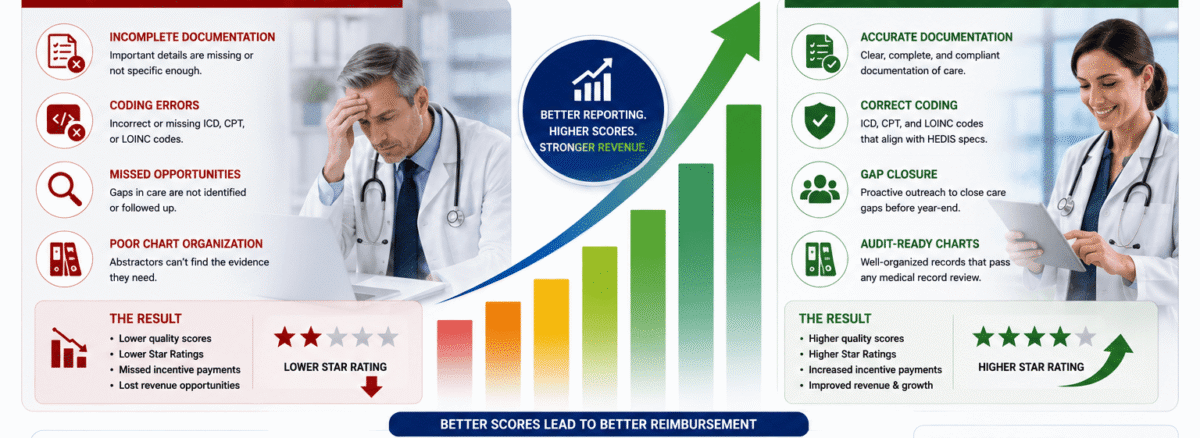
A health plan rarely lowers a provider’s score because the care itself was bad. More often, the chart never proved the care happened the way it actually did, and that gap shows up as a missed measure nobody in the office was tracking. That’s the part of HEDIS reporting most practices get wrong. It’s not really about paperwork. It’s about making sure the good care you already deliver actually counts.
HEDIS reporting is how health plans measure and report the quality of care their members receive, using standardized measures built by NCQA. Providers drive most of that data through documentation, coding, and gap closure, so tighter HEDIS reporting on the practice side directly raises the quality scores tied to your contracts. NexCure LLC handles that provider-side work, from chart abstraction to gap analysis, so scores reflect the care you’re actually giving.
What Is HEDIS, Exactly?
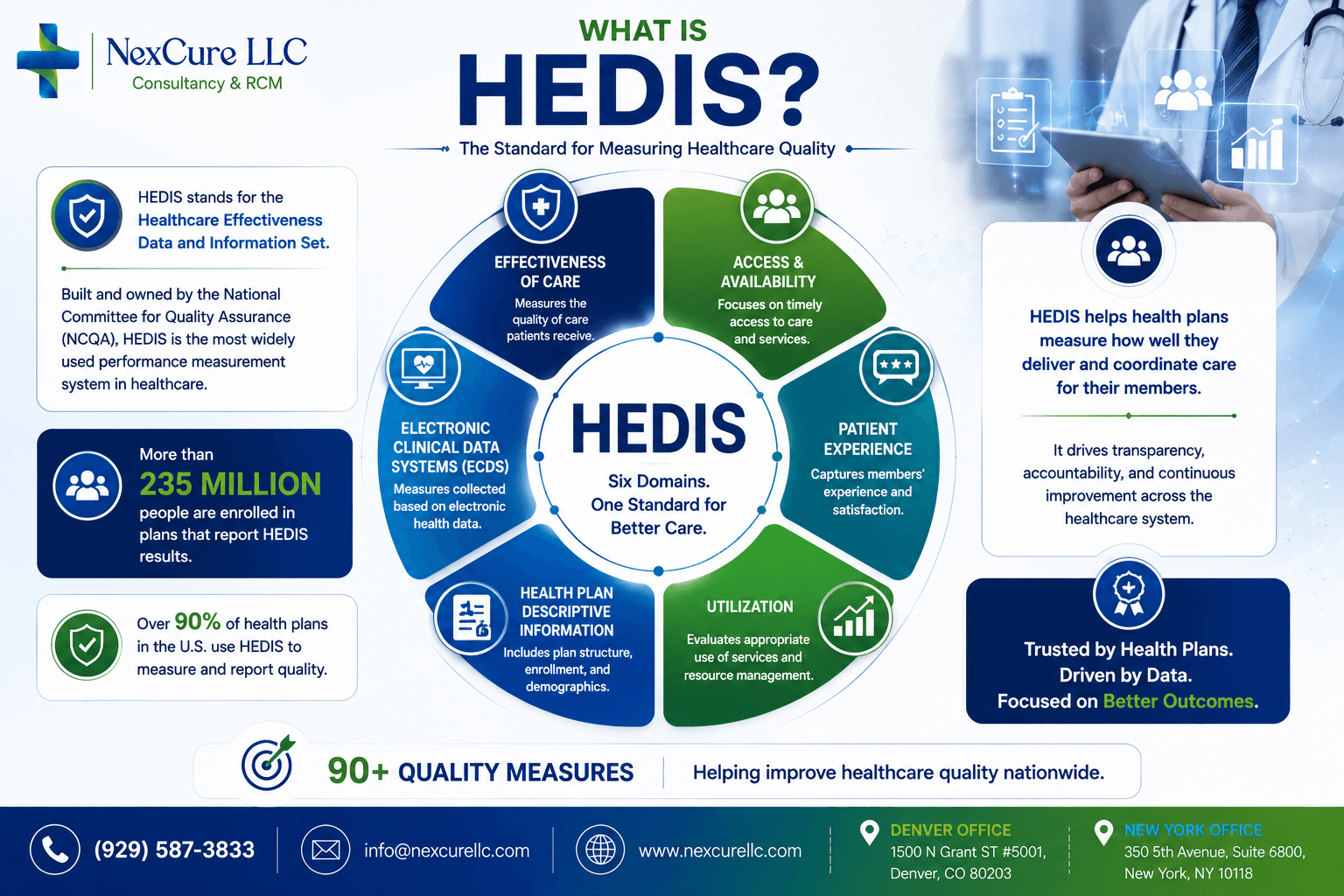
HEDIS stands for the Healthcare Effectiveness Data and Information Set, built and owned by the National Committee for Quality Assurance (NCQA). It’s the measurement system health plans use to report how well they’re delivering and coordinating care, covering more than 90 measures across six domains: effectiveness of care, access and availability, patient experience, utilization, health plan descriptive information, and measures collected through electronic clinical data systems.
More than 235 million people are enrolled in plans that report HEDIS results, and over 90% of health plans in the country use it. That scale is exactly why it matters to your practice. Health plans don’t generate this data out of thin air. They pull it from claims, lab feeds, pharmacy records, and your clinical documentation. If your charts don’t clearly show a diabetic patient’s eye exam or a child’s well visit, the health plan can’t count it, no matter how well you actually treated that patient.
HEDIS Reporting Requirements Providers Actually Deal With
Health plans are the ones who submit final HEDIS results to NCQA, typically by June 15 each year, using a hybrid method that combines claims data with medical record review. But the requirements that land on your desk look different. You’re the one who needs:
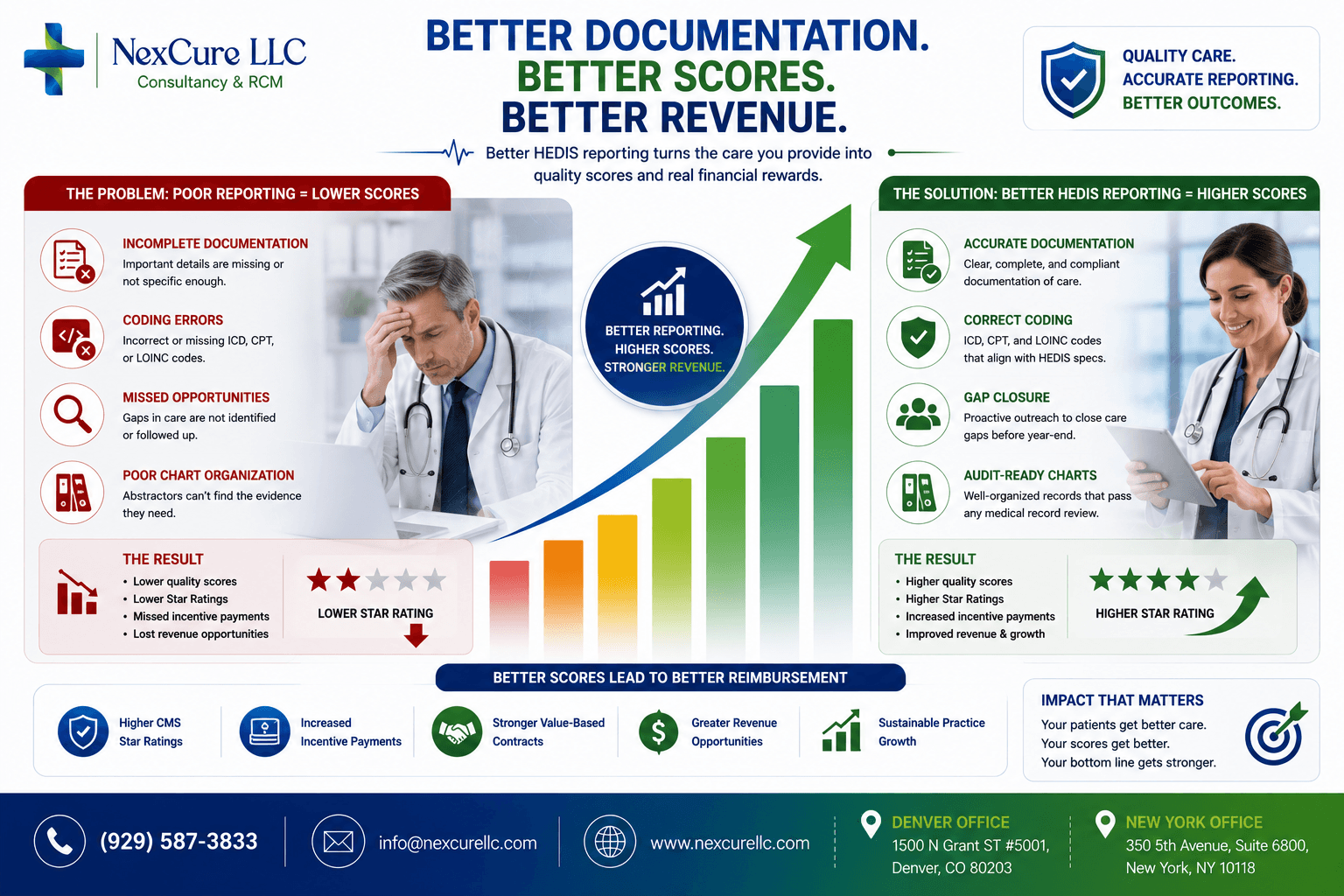
- Documentation specific enough for chart abstractors to confirm a measure was met, not just implied
- Coding that matches ICD, CPT, and LOINC value sets, so claims data alone can close a gap without a manual chart pull
- A process for outreach on missed screenings, immunizations, and follow-ups before the measurement year closes
- Charts are organized and ready for a compliance audit, since payers and NCQA-licensed auditors can request medical record review at any point
Miss any of these, and a plan’s abstractor either can’t find the evidence or runs out of time looking for it. Either way, a measure that should have counted in your favor doesn’t.
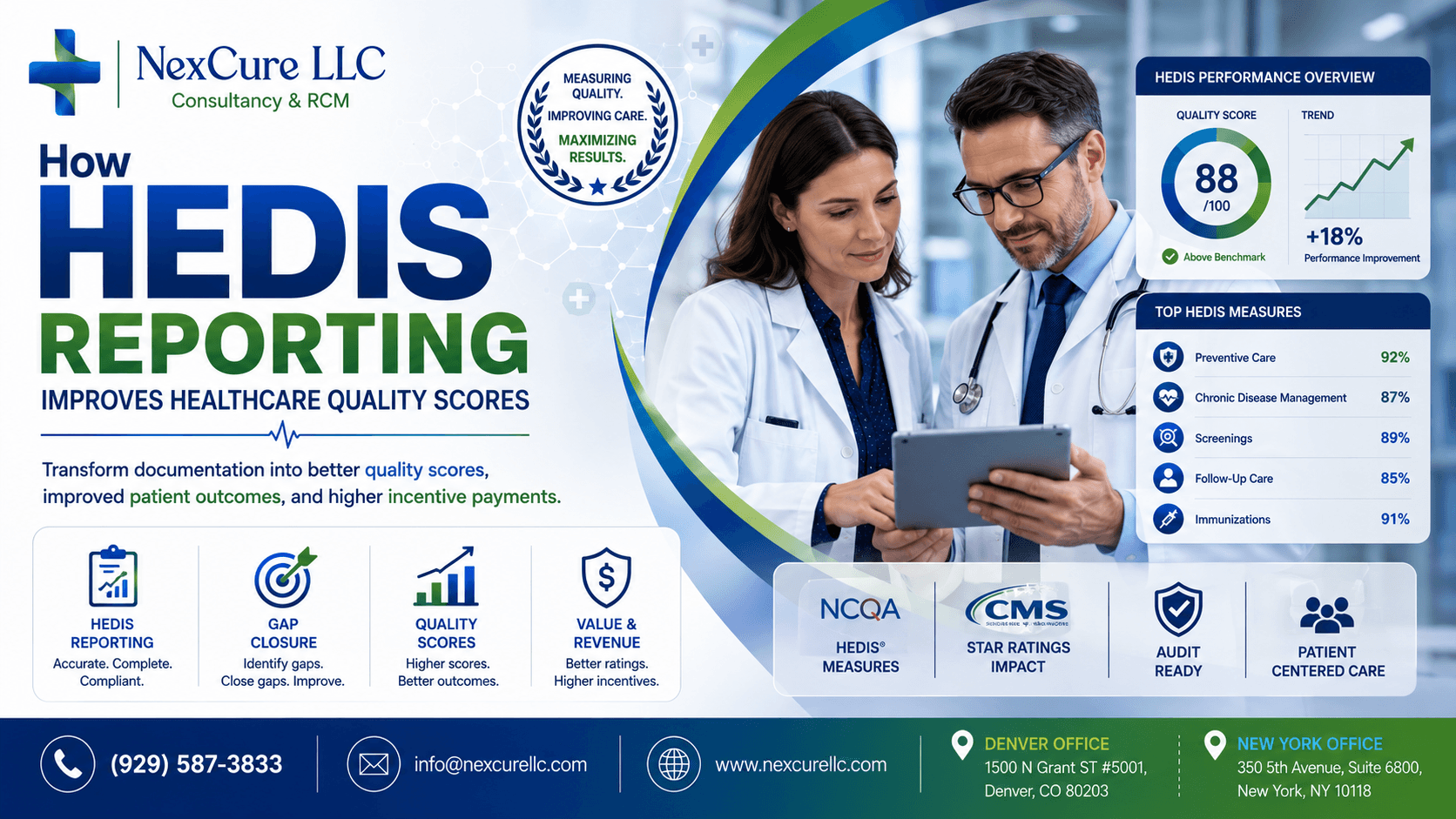
How Better HEDIS Reporting Actually Raises Quality Scores
The mechanism is simple, even if the specifications aren’t. Every HEDIS measure is a rate: how many eligible patients got the recommended screening, test, or follow-up, out of everyone who should have. Better reporting doesn’t invent new patients into that numerator. It stops real, completed care from falling out of it.
A colorectal cancer screening that never gets coded correctly still helps nobody’s score. A follow-up visit that happened but sits in a scanned PDF, an abstractor never opens, and still counts as missing. Clean up that documentation and coding trail, and the same patient population you already treat starts showing up correctly in the numerator. Rates climb. NCQA Health Plan Ratings and CMS Star Ratings both move with them. Since so many value-based contracts and Medicaid managed care agreements tie provider incentive payments directly to these scores, tighter reporting turns into real revenue, not just a better report card.
Where HEDIS Data Actually Lands
Where your numbers end up depends on the type of plan you’re contracted with. Medicare Advantage plans feed HEDIS results into CMS Star Ratings, which set bonus payments and can shift enrollment year over year. Marketplace plans report through the CMS Quality Rating System, a HEDIS-based scorecard that members see while shopping for coverage. Commercial and Medicaid plans roll the same data into NCQA’s own Health Plan Ratings and, in many states, into Medicaid quality programs built directly on HEDIS specifications.
None of these programs list your practice by name. But every one of them scores a plan using data your practice generated. Fall short on HEDIS reporting requirements at the provider level, and it shows up three or four steps downstream as a lower Star Rating, a lower Marketplace score, or a smaller shared-savings check landing back on your desk.
Why Practices Outsource HEDIS Reporting
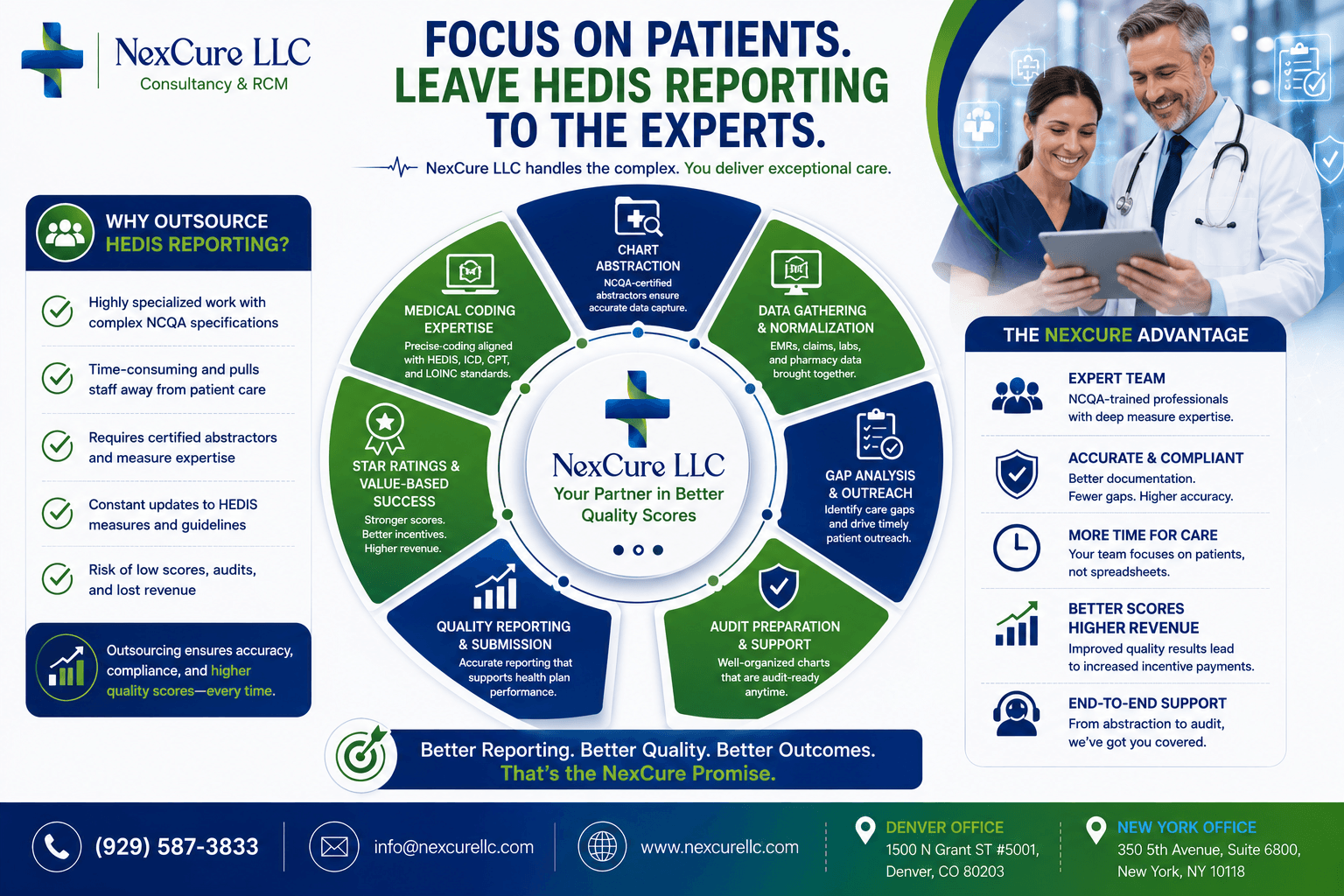
Most practices don’t have staff who abstract charts against NCQA specifications for a living, and pulling clinical staff off patient care to chase down gap lists is expensive in ways that never show up on a line item. That’s the real case for outsourcing HEDIS reporting. It hands off a highly specific, deadline-driven workload to people who already know the measure specs cold, so your own team stays focused on patients instead of spreadsheets.
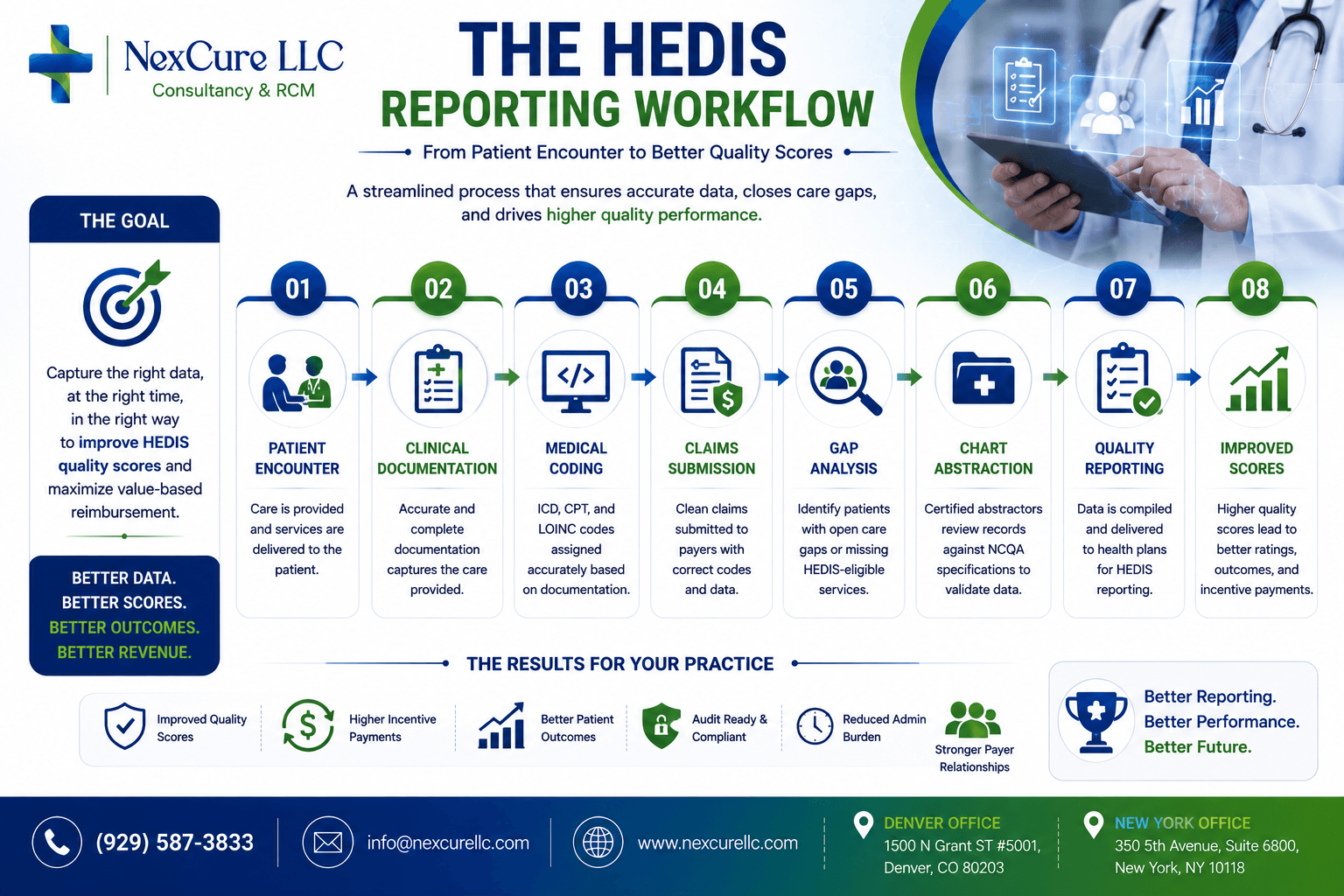
NexCure LLC’s HEDIS reporting services cover the parts that actually move scores: certified abstractors who compare charts against NCQA requirements, data gathering across EMRs, claims, labs, and pharmacy feeds normalized under consistent coding, gap analyses that flag exactly which patients still need outreach, and audit preparation so a medical record review never catches your practice unprepared. We also connect that work back to Star Ratings, Medicaid managed care programs, and ACO contracts, so the reporting effort lines up with the incentive payments it’s meant to protect.
The Bottom Line
HEDIS reporting doesn’t measure how good your care is. It measures how well that care gets proven on paper, and those are two very different things until your documentation catches up. Tighten the reporting process, and quality scores start reflecting the care you were already delivering all along.
Want help closing the gap between the care you give and the scores you’re getting credit for? NexCure LLC’s HEDIS reporting services are built to close exactly that gap.
Leave feedback about this